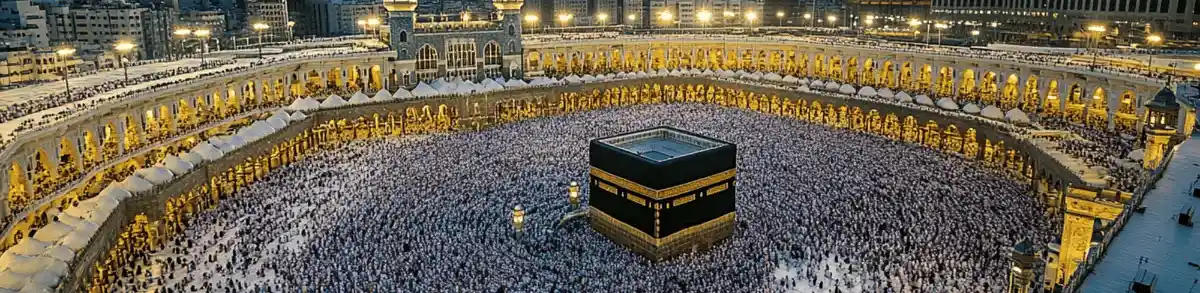
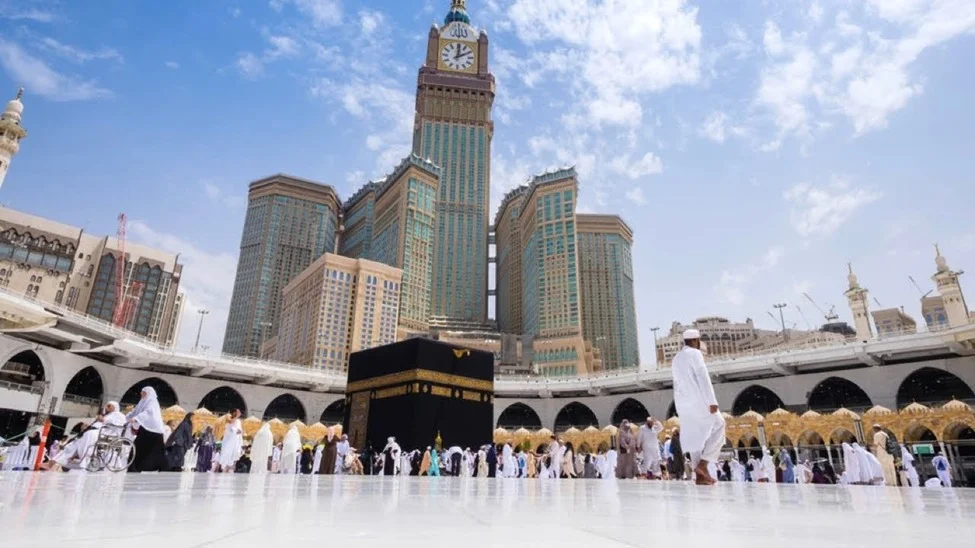
Two agencies send you a quote. Both say “5-star hotel near the Haram”, “return air ticket included”, “visa processing”, “12 nights”. The prices are close enough that you start deciding on small differences. One trip turns out calm, organized and close to the Haram. The other leaves you walking 40 minutes in the heat, sharing a room with strangers you never agreed to, and calling an agency number in Dhaka that nobody picks up.
Same price. Same country. Completely different experience.
The gap almost never comes from the price itself. It comes from details that most pilgrims never think to ask about until they are already in Saudi Arabia, when changing anything becomes expensive and stressful. A package is really a bundle of promises about hotels, transport, food, timing and support. If those promises are vague on paper, they will be vague in practice too.
This guide walks through the 12 checks that separate a solid offer from a risky one. It is written to help you judge any agency’s quote, including the one that sent you here. Read it with the quote in front of you and mark the answers as you go.
Why Two Umrah Packages at the Same Price Can Be Completely Different
Umrah pricing is built from a handful of cost lines: air ticket, hotel in Makkah, hotel in Madinah, transport between cities and inside the cities, meals, visa, and the agency’s own service charge. When two quotes match on price, at least one of them has cut something. Your job is to find out what.
Hotel distance is the biggest hidden variable. Rooms within 300 metres of the Haram cost far more than rooms 1.5 km away, and the second one can still be described as “close to the Haram” in an advertisement. Meals are next: two meals a day versus none is a real difference in both comfort and money. Transport changes everything too. A private air-conditioned bus that leaves when your group is ready is not the same as a shared shuttle that runs twice a day.
Group size quietly affects service. A guide responsible for 20 people can help you personally during Tawaf. A guide responsible for 80 cannot, and you may end up figuring out the rituals on your own.
Season matters as well. Hotels and flights in Ramadan or during school holidays cost far more than in the quieter months, so a low quote for a peak date deserves extra scrutiny. If you want to understand how the calendar affects pricing, our guide to the best time to do Umrah from Bangladesh breaks down the seasons and their trade-offs.
12 Things to Check Before You Pay
1. Is the Agency Properly Licensed?
In Bangladesh, Hajj and Umrah agencies operate under government approval, and the list of approved agencies is published by the Bangladesh Hajj Office. Ask for the agency’s licence number and check it rather than taking a photocopy at face value. A legitimate agency will share the number without hesitation.
Also ask who handles the Saudi side of your booking. Reputable agencies work with approved Saudi service providers for visas, hotels and ground transport. You can review the official frameworks on the Saudi Ministry of Hajj and Umrah site and confirm current agency listings through the Bangladesh Hajj Office.
What should worry you: an agency that avoids the question, gives a number you cannot verify, or says approval “is being processed” while asking for a deposit. If you want a deeper walkthrough of what documents and eligibility rules apply, see Umrah requirements from Bangladesh.
2. How Far Is the Hotel from the Haram — in Metres, Not Adjectives?
“Walking distance”, “a short walk”, “near the Haram” and “Haram view” mean very different things. Ask for the distance in metres, and specifically metres from the hotel door to the nearest Haram gate you will actually use. The gate matters. A hotel 600 metres from King Abdul Aziz Gate is not the same as 600 metres from a gate that is closed to your entry direction.
A good answer sounds like: “Al-X Hotel, 450 metres from Gate 79, about a 7-minute walk, no shuttle needed.” A weak answer sounds like: “Very close, sir, walking distance.”
If the hotel is more than roughly a kilometre away, ask whether a shuttle runs, how often, and whether it operates for Fajr and for the night prayers. A free shuttle that runs three times a day is not much help when you want to pray Tahajjud. During peak seasons, some hotels also require you to change buildings, so ask whether your hotel name is guaranteed for every night of your stay.
3. Are the Hotels Named in Writing?
Ask for the hotel name, city and star rating in writing, in the quotation itself, not in a phone call. A written name protects you. It also lets you check the hotel yourself on a map and read recent reviews.
Watch for wording like “or similar”. It is common in the industry and not always dishonest, because hotels do get overbooked. But if “or similar” appears, ask what happens if the alternative is further away or a lower standard. Ask whether you will be informed before departure and whether any price adjustment applies.
What should worry you: an agency that refuses to name hotels until after full payment, or that names a hotel only verbally. Vague hotel descriptions are one of the clearest warning signs in this whole checklist.
4. What Exactly Is Included — and What Is Not?
Read the inclusion list line by line and write down every item. Then read the exclusion list, which is often shorter and more revealing. Typical exclusions include Saudi visa fees in some packages, ziyarah tours, laundry, extra luggage, meals outside the plan, and personal transport.
Ask specifically about: return air ticket, visa fee, Makkah hotel, Madinah hotel, intercity transport, airport transfers, meals, ziyarah in both cities, a guide or Muallim, and Zamzam water allowance on return. If an item is not written down, assume it is not included.
The total cost is rarely just the quoted figure. There are passport costs, vaccinations, shopping, gifts, and spending money on the ground. For a full picture of what a trip really costs beyond the package price, read Umrah cost from Bangladesh.
5. Are Meals Part of the Package?
Meals matter more than people expect. You will be walking long distances, praying in crowds, and sleeping little. Having breakfast and dinner arranged removes a daily logistical headache and a daily expense.
Ask how many meals per day, where they are served, and what kind of food. Is it a buffet at the hotel, a fixed menu at an outside restaurant, or a coupon system? Is the food Bangladeshi, South Asian, or Arabic? Can they accommodate a family member with a medical diet?
A good answer names the meal plan: “Breakfast and dinner buffet at the hotel, Bangladeshi and Arabic dishes.” A weak answer is “food will be arranged”. That phrase has no meaning. If meals are not included, budget for them and check how far the nearest affordable restaurant is from your hotel.
6. What Is the Room Sharing Arrangement?
Room sharing is where families often get surprised. Ask clearly: quad, quint, or sextuple sharing? How many beds in the room, and how many bathrooms? Will your family be kept together, or will a member be placed in another room to fill a gap?
If you are travelling alone, ask who you will share with. Some agencies place single male or female pilgrims in rooms with strangers of the same gender, which is normal and acceptable to many, but you should know in advance. If you want a private room for your family, ask for the supplement and get it in writing.
Also ask about the room type. A room with one bathroom shared by six people in a busy season can slow your group down badly before prayers. This is a practical detail, and agencies that have handled many Bangladeshi groups will have clear answers.
7. Which Airline, and Is It a Direct or Transit Flight?
Ask for the airline name and the route, not just “return ticket included”. From Dhaka you may fly direct to Jeddah or Madinah on some carriers, or travel with a stop in Doha, Dubai, Abu Dhabi, Sharjah, Istanbul or Kuala Lumpur.
Transit flights are often cheaper, and there is nothing wrong with them. But they add hours to the journey, and a long layover in the middle of the night is hard on elderly parents and young children. Ask about the total travel time and the layover length. Ask whether any transit visa is required. Ask whether meals on board and baggage allowance are included in the fare.
Baggage allowance is worth checking closely. Pilgrims commonly carry more on the return because of Zamzam, gifts and clothing. Excess baggage charges at the airport are painful and avoidable if you know your allowance before you pack.
8. When Is the Ticket Actually Confirmed?
A quotation with a “confirmed seat” is not the same as a ticket issued in your name. Ask when the ticket will actually be issued and ask for the ticket number or booking reference once it is. Until a ticket is issued, seats can be moved, prices can rise, and group allocations can change.
Check the name spelling against your passport exactly. A single wrong letter can cause problems at check-in. If your passport expires soon, check the validity requirement before booking, because many airlines and Saudi authorities require a set minimum validity beyond your travel dates.
What should worry you: an agency that keeps saying the ticket “will be issued soon” for weeks, or that asks for full payment without showing any confirmed booking. Ask for a written date by which your ticket will be issued.
9. What Happens If Your Visa Is Refused?
Umrah visas are usually processed through the official Saudi systems, and applications can be delayed or refused for reasons outside the agency’s control. What matters is how the cost is handled if that happens.
Ask before paying: if my visa is refused, which parts of my payment are refundable, which are not, and how long will a refund take? Some costs, such as visa fees or airline cancellation charges, may be non-refundable. Others may be returned. Policies differ between agencies, so there is no universal answer here. Get the answer in writing.
Also ask who submits the application and through which channel. The Nusuk platform is the official Saudi system used for Umrah permits and related services, and rules around it change from time to time. For a fuller explanation of the process, see our Umrah visa guide for Bangladesh. Because Saudi entry and visa rules are updated frequently, always confirm the current requirements on the official portals before you travel.
10. What Is the Cancellation and Refund Policy?
Life happens. A family emergency, an illness, a passport delay. Ask what happens if you cancel, and ask for the policy in writing before you pay. A typical policy may have different deductions depending on how close to departure you cancel, but the specific terms vary by agency and by airline.
Ask these directly: how much is deducted if I cancel 60 days before departure? Thirty days? One week? How is the refund paid, and within how many days? Is the service charge refundable at all?
What should worry you: no written policy, a policy shared only verbally, or an agency that becomes vague the moment you ask about refunds. A serious agency will hand you the terms without being pushed.
11. How Large Is the Group, and Is There a Bengali-Speaking Guide?
Group size changes the quality of your trip. With a group of 15 to 25, a guide can gather everyone, walk you through Tawaf and Sa’i, and answer individual questions. With a group of 60 or more, you are effectively on your own for much of the time.
Ask how many people will travel with you, whether the guide travels with the group from Dhaka, and whether the guide speaks Bengali. For most Bangladeshi pilgrims, especially first-timers and elderly travellers, a Bengali-speaking guide makes the rituals far easier to follow correctly.
Also ask whether a Muallim or religious guide will be available to perform Umrah with your group, and whether ziyarah tours in Makkah and Madinah are included or paid separately.
12. Who Do You Call in an Emergency in Saudi Arabia?
Ask for a Saudi-based contact, not just a Dhaka office number. You want a person who can reach your hotel, deal with a lost passport, arrange a doctor, or handle a transport problem while you are there.
Ask for a 24-hour WhatsApp number and test it before you travel. Ask whether the agency has a representative in both Makkah and Madinah. Ask what assistance they provide if a pilgrim falls ill or is hospitalised.
Keep local emergency numbers saved as well. Saudi Arabia has a unified emergency number along with separate police, ambulance and fire numbers, and your guide should confirm the current ones on arrival. Keep your hotel address written in Arabic on your phone as a backup.
Warning Signs of an Unreliable Agency
- Pressure to pay quickly, often with a “price increases tomorrow” message
- Refusal to put hotel names, inclusions or refund terms in writing
- Vague hotel descriptions such as “near Haram” with no distance given
- Prices far below the market for the same dates, with no clear explanation of what was cut
- Cash-only payment with no official receipt or written confirmation
- No verifiable licence number or refusal to share it
- No Saudi-based contact person or emergency number
- Answers that change each time you ask the same question
Questions to Ask Before You Pay the Deposit
- What is your licence number, and where can I verify it?
- Which hotels in Makkah and Madinah, and how many metres from the Haram?
- How many meals a day, and where are they served?
- Which airline, which route, and how long is the journey?
- How many people in the room, and how many bathrooms?
- What is included, and what is definitely not?
- When will my ticket be issued, and what is the booking reference?
- What happens if my visa is refused, and which costs are refundable?
- What is your cancellation policy, and can I have it in writing?
- How large is the group, and is the guide Bengali-speaking?
- Who is my contact in Saudi Arabia, and what is the WhatsApp number?
Frequently Asked Questions
How do I know if an Umrah agency is licensed in Bangladesh?
Ask for the licence number and check it against the official list published by the Bangladesh Hajj Office. A licensed agency will provide this immediately. If the number cannot be verified, or the agency avoids the question, treat that as a serious concern and look elsewhere before paying anything.
Should I pay the full amount upfront?
It is common to pay a deposit to confirm your place, with the balance due closer to departure. The exact schedule varies by agency, so ask what the instalments are and when each is due. Whatever the arrangement, keep an official receipt for every payment and confirm the terms in writing before the first transfer.
Why are some Umrah packages so much cheaper?
Usually because something has been reduced: hotels further from the Haram, fewer meals, shared shuttles instead of private transport, transit flights with long layovers, or larger rooms with more people. Sometimes a low price is a genuine off-season deal. Compare the details line by line rather than the headline figure.
Is a hotel 500 metres from the Haram far?
For most healthy adults, 500 metres is a comfortable walk of roughly six to eight minutes, and many pilgrims prefer it because it is quieter than the immediate Haram area. For elderly parents, wheelchairs, or anyone with breathing or knee problems, it can feel long when repeated five times a day. Distance also depends on which gate you use.
Can I get a refund if my Umrah visa is rejected?
It depends on the agency’s written policy. Some costs, such as visa fees and airline cancellation charges, may not be refundable, while other parts of your payment may be returned in full or with a deduction. There is no single rule across the industry, so ask this question before you pay and get the answer in writing.
Choosing well comes down to patience. Ask the awkward questions, insist on written answers, and compare offers on detail rather than price alone. It also helps to understand how agencies operate in this market, and our guide to choosing an Umrah agency in Bangladesh goes deeper into that side of the decision.
If you would like to see what a clearly documented package looks like, including named hotels and written inclusions, you can review our Umrah packages from Bangladesh and use this checklist against them. Judge every agency the same way, including us. The questions above are exactly the ones worth asking before any money leaves your hands.
Leave a Reply