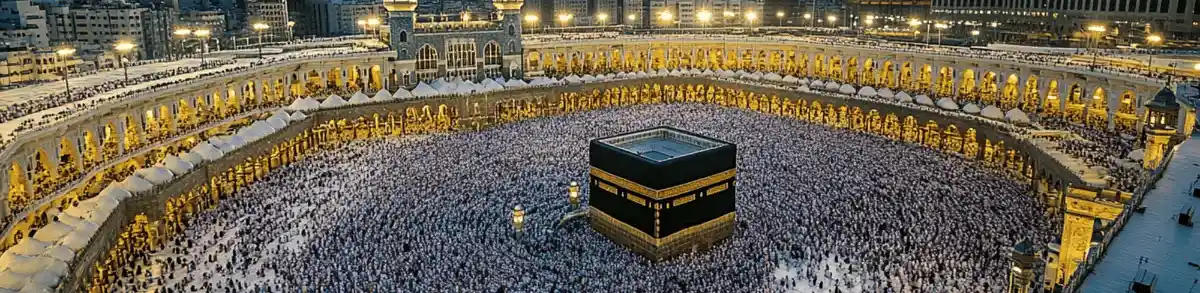
For a lot of Bangladeshi families, taking elderly parents for Umrah isn’t just a trip. it’s something adult children have been quietly saving toward and planning for years, often as a way of honoring everything those parents gave up for the family. It’s also, understandably, the trip people worry about most: Will Ma be able to walk to the Haram? What if Abba’s blood pressure medication runs out? What happens if someone can’t manage the stairs?
We’ve arranged this journey for enough families to know exactly where the real concerns are and just as importantly, where they aren’t. This guide walks through what actually matters when you’re traveling with elderly parents or a multi-generational family, from booking through to the rituals themselves.
Is There an Age Limit for Umrah?
No there’s currently no fixed upper age limit for Umrah. A temporary age restriction existed during the pandemic-era resumption of pilgrimage, but that’s no longer in effect. The real consideration isn’t age on paper, it’s physical readiness: mobility, chronic conditions, and stamina for walking and standing matter far more than the number of candles on a birthday cake.
Before You Book: A Pre-Travel Health Check
Before confirming any package, it’s worth taking elderly parents for a general checkup with their doctor, specifically to discuss the physical demands of Tawaf, Sa’i, and general walking between the hotel and Haram. Ask about:
- Whether their current medication supply will last the full trip, plus a few extra days as buffer
- Any adjustments needed for the meningitis (ACWY) vaccination required for the visa covered in our Umrah visa guide from Bangladesh
- Fitness for walking distances and standing for extended prayer times
- A written note from the doctor listing medications and conditions, useful both for airport security and in case of a medical situation abroad
Worth knowing: travel insurance premiums for Umrah typically scale up with age, since older pilgrims carry higher medical risk factor this into your overall budget rather than being surprised by it later.
Choosing the Right Package and Hotel for Elderly Comfort
This is where most of the real difference gets made. For elderly parents, hotel proximity to the Haram matters more than almost any other package feature — every extra hundred meters is a hundred meters walked multiple times a day. Prioritize:
- A hotel genuinely within a short, level walking distance of the Haram, not just “nearby” on a map
- Ground-floor or elevator-accessible rooms — confirm this specifically rather than assuming
- Smaller, private group transport over large shared buses, which usually means less walking to pickup points and more flexibility around rest breaks
We covered general package pricing in our Umrah cost breakdown from Bangladesh for elderly travelers, it’s often worth paying more for hotel proximity than for other add-ons, since it affects daily comfort more than almost anything else in the package.
Wheelchair and Mobility Support in Makkah and Madinah
This surprises a lot of families: free manual wheelchairs are available directly at several gates of Masjid al-Haram, including King Abdul Aziz Gate, Gate 74, and Ajyad Gate, provided by the General Authority for the Care of the Two Holy Mosques on a first-come, first-served basis. Paid electric scooters are also available to rent for those who want more independence without needing someone to push them.
If mobility is a significant concern, it’s worth arranging wheelchair support in advance through your agency rather than relying entirely on availability at the gate, especially during busier periods.
Performing Tawaf and Sa’i When Walking Is Difficult
Both Tawaf and Sa’i can be performed entirely from a wheelchair there’s no requirement to walk if walking isn’t physically possible, and dedicated wheelchair lanes exist for both rituals. This is a completely accepted accommodation, not a compromise on the pilgrimage itself. We walk through the full ritual sequence in our step-by-step Umrah guide, which is worth reviewing together as a family so elderly parents know what to expect at each stage, wheelchair or not.
Packing and Medication Considerations
Beyond the general essentials covered in our Umrah packing list, a few things matter more specifically for elderly travelers:
- A well-broken-in pair of walking shoes this is not the trip to break in new footwear
- A small folding cushion or portable seat for rest breaks during long periods in the Haram
- A clearly labeled medication organizer, especially for multiple daily doses
- Comfortable, breathable clothing suited to standing and sitting for long stretches, rather than anything restrictive
Timing Your Trip Around Their Comfort, Not Just Yours
Deep summer heat (June–August) and the intense crowds of Ramadan’s last ten nights are both genuinely harder on elderly bodies, even though they’re appealing times to travel for other reasons. Our season-by-season guide to the best time for Umrah goes into this in more detail, but as a general rule: the cooler, calmer months from November through February tend to be the most forgiving window for elderly parents specifically.
Traveling as a Family: Practical Logistics
If you’re the one organizing the trip for parents, build in more time than you think you need for walking, for rest, for prayer, for simply not rushing between rituals. Assign one family member as the primary point of contact with the agency for anything medical or mobility-related, and make sure hotel staff are informed in advance of any specific needs (ground floor, wheelchair access, dietary restrictions). A trustworthy agency see our guide on choosing a reliable Umrah agency in Bangladesh should be willing to accommodate these requests explicitly in writing, not just verbally.
Frequently Asked Questions
Is there an age limit for elderly parents to perform Umrah? No fixed upper limit currently applies the real factor is physical readiness, which is best assessed with a doctor before booking rather than assumed based on age alone.
Can my elderly parent complete Tawaf and Sa’i if they can’t walk long distances? Yes both rituals can be performed entirely from a wheelchair, with dedicated lanes for wheelchair users at both Tawaf and Sa’i. This is a fully accepted accommodation, not a lesser version of the pilgrimage.
Are wheelchairs available to rent, or do we need to bring one? Free manual wheelchairs are available at several Haram gates on a first-come, first-served basis, and paid electric scooters can be rented for more independence — arranging support in advance through your agency is worth it during busier periods.
Does travel insurance cost more for elderly pilgrims? Generally yes premiums typically scale with age due to higher medical risk, so it’s worth factoring into your total budget rather than treating it as a fixed cost across all family members.
What’s the single most important thing to get right when booking for elderly parents? Hotel proximity to the Haram, genuinely verified rather than taken on faith it affects daily comfort more than almost any other decision in the package.
Watching a parent complete their pilgrimage is one of those moments families remember for the rest of their lives — the logistics are worth getting right precisely because the moment itself deserves to be free of unnecessary stress. If you’d like help planning a trip specifically built around comfort and accessibility, reach out about our family and elderly-friendly Umrah packages and we’ll talk through exactly what your parents need.
Leave a Reply